Showing posts with label Ridley Scott. Show all posts

Sunday, 3 June 2012

'Prometheus' review:


A running theme among the half-dozen trailers that have teased Ridley Scott's 'Prometheus' is that they've tended to be more alluring and spectacular when focused on the numerous eye-catching shots of spaceships and strange alien worlds, whilst offering only fleeting glimpses at the story and characters. It turns out that's because 'Prometheus' has no story or characters. It has a basic sort of "plot", I suppose: astronauts head to a distant planet in order to find answers about the creation of mankind. And it has characters in the sense that there's a reasonably impressive international ensemble cast thanklessly filling the various spacesuits - including Noomi Rapace, Michael Fassbender, Guy Pearce, Idris Elba and Charlize Theron.

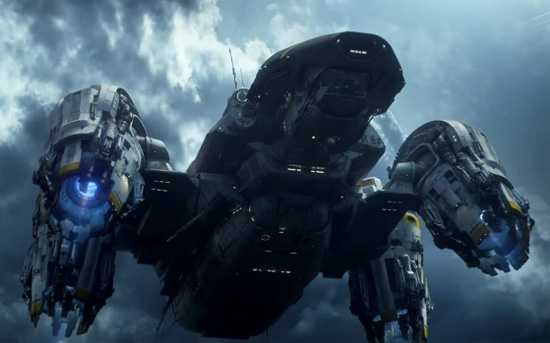
Yet there can be little doubt that 'Prometheus' is a triumph of design and special effects rather than human drama. The film looks stunning, with the CGI spaceships and beautifully crafted interior sets having a sort of painted concept art look. But for all its self-important posturing around issues of faith, god and the nature of creation, the film's pretense at being this summer's "thinking person's blockbuster" comes to nothing. During its few cod philosophical exchanges - some of which should make your toes curl - the film's grasp of the deeper issues never seems to want to venture beyond truisms. It's a shame because the set up suggests something much smarter, or at least more interesting.


Rapace, as scientist Elizabeth Shaw, is the ship's blindly faithful Christian, whilst her lover and fellow scientist (played by Logan Marshall-Green) is supposedly the on-board skeptic as they search for humanity's alien creator. Meanwhile, Fassbender is David, a humanoid robot whose behaviour is modeled on his creators, something he seeks to perfect by watching old films in his downtime. A wrinkly old Guy Pearce is his creator and surrogate father, as well as the head of the huge corporation financing the mission. Charlize Theron has her own nascent "creator" issues as the stern and possibly treacherous leader of the expedition. Given that this is nominally a prequel to Scott's seminal 'Alien', it's entirely appropriate that it should explore that franchise's theme of motherhood and the destructive, violent act of creation itself: it's a melting pot of strong character archetypes with competing ideologies, which seems primed to react - only there is no heat.

Potentially interesting characters die left and right with scarcely a decent scene to their name. Supposedly sensible people react in increasingly irrational and oddly inhuman ways as the film goes on, for instance when a group of characters voluntarily give up their lives without any clear indication of why (in fact they don't really even ask for one, but as a united group blindly accept death at the merest asking). The film lurches messily between fussily directed action scenes which lack either the body horror of 'Alien' or the excitement of a crowd-pleasing summer movie, almost as if the filmmakers lacked the courage to devote any screentime to the potentially divisive "let's all talk about religion" thing the movie seemed to kind of want to be about originally. There are nods to various big ideas and questions here and there, but they are extremely tentative.

Then there's the handling of the film's various alien creatures and their multiple messy incarnations which lack credibility even if you suspend a whole universe's supply of disbelief. (Those sensitive to SPOILERS might want to avert their gaze now.) How does this reproductive cycle work?:

1) There are rows of eggs full of black goo.
2) A human man eats the black goo and becomes a sort of crusty monster.
3) The crusty monster man has sex with a human woman and she quickly gives birth to a tentacle monster.
4) Left alone for (presumably) a few hours, said tentacle monster becomes enormous. It then latches onto a huge white alien and eats his face.
5) Once partly-devoured by the tentacle monster, the big white alien's body yields a chest-bursting, quadrupedal alien not dissimilar to the original "xenomorph".


Please explain how that makes any kind of sense. I genuinely want to know why I'm supposed to think anything other than "this sure is a random sequence of events" at this point. Even if you accept that this primordial gloop is simply enabling the rapid evolution of an organism (and that's a leap you have to make yourself), doesn't it sort of imply that the "xenomorph" would then also become something else entirely different the next step along the chain? So then why do all the Aliens in the sequels look the same? Are they supposed to represent the pinnacle of evolution? I'm honestly not trying to be pedantic in the least - I just want to know how this could possibly make sense, even in the limited way a film about sexy future-spacemen warrants.

A friend of mine said that (one of) his problem(s) with 'Prometheus' is that it raised far more questions than it answered, at least pertaining to the way it links into 'Alien' continuity. I disagree. It's not a problem that the film raises more questions than it answers - after all, so does '2001'. The problem is that the questions it raises are invariably very silly, all relating to the who-could-care-less world of the 'Alien' mythos. Whilst it labours to provide trite and convoluted answers to the grander, more universal questions that are perhaps best left enigmatic. It should have been the other way around.

'Prometheus' is out now in the UK, rated '15' by the BBFC.

Saturday, 15 May 2010

Robin Hood at the Movies...

Just a quick post here. After reviewing Ridley Scott's latest version of the Robin Hood legend, I have put up a compilation of videos showing the various cinematic depictions of the English folklore hero in action.

Douglas Fairbanks in 'Robin Hood' (1922)

Fairbanks seems to have set the model for many future screen representations of Robin Hood, with a not too dissimilar costume from that Fylnn would later wear in the 30's. He is super-agile (famously doing his own stunts) and a bit of a prankster: other traits that would define the hero for the best part of the 20th Century.


Errol Fylnn in 'The Adventures of Robin Hood' (1938)


The first Australian to play the outlaw, Flynn clearly keeps a lot of the traits of the Fairbanks hero, albeit with the additional charisma generated by his voice in this talking picture. This film, produced and directed by the same team that would later give us 'Casablanca' (Michael Curtiz and Hal B. Wallis), also boasted some of the earliest (and best) technicolor photography which is shown off in the courtly pageantry of it all. As with the earlier portrayal, Robin Hood is a swashbuckling rouge with a heart of gold. The film also features Claude Rains as Prince John, which you can't really argue with, can you?


The film also inspired a number of Loony Toons animated parodies directed by Chuck Jones, including the 1939 musical short 'Robin Hood Makes Good' and the more famous 'Rabbit Hood' (below) from 1949 which sees Buggs Bunny in the staring role and features stock footage of Errol Flynn (nine years later Daffy Duck would earn the honour, appearing in 'Robin Hood Daffy').


Richard Todd in 'The Story of Robin Hood and His Merrie Men' (1952)

Disney made a fairly poor live-action movie in 1952, starring Richard Todd (the man originally cast as Bond in 'Dr. No') as a more masculine, often shirtless, hero. However, the movie is (as the below clips shows) fairly derivative of the Flynn version above. This version of the tale, shot in the same dull and dreary way typical of all Disney movies from the 40s to the 70s ('Song of the South' to 'Pete's Dragon' all look like this). It would be the last major big-screen 'Hood' for twenty years... until Disney told the story again with an anthropomorphised Fox...


A Cartoon Fox (voiced by Brian Bedford) in 'Walt Disney's Robin Hood' (1973)


Some have found a sort of racism in this animated version, directed by Wolfgang Reitherman. The "bad" animals are all African (elephants, rinos, lions, snakes etc), whilst all the "good" animals are woodland creatures (rabbits, bears, roosters, mice, foxes etc). However, it is far more likely that Reitherman was simply recasting the familiar characters of his 1967 film 'The Jungle Book'. Baloo the bear is clearly the model for Little John (both are voiced by Phil Harris), whilst the Prince John lion and his snake advisor are clearly that film's bad guys: Shere Kahn and Kaa. The result is a re-telling of the myth which is derivative both of older Disney films and of the Fairbanks/Flynn movies, as it retreads many of the same plot points. The clip below shows Robin Hood and Little John fall from a log into some water, in a clear visual nod to both the previous versions seen in the above clip. Here Robin Hood is agile, fast and cunning, with great wit and grace as well as skill, much like the Fairbanks/Flynn portrayals. He is also dressed similarly to those men.


John Cleese in 'Time Bandits' (1981)


Far and away my favourite depiction of Robin Hood is the parody performed by John Cleese in Terry Gilliam's fantasy film 'Time Bandits'. In terms of dress he is clearly inspired by the now established cinematic image of the hero, however Cleese plays on his noble origins as "Robin of Loxley" and turns him into a condescending royal. Brilliantly funny.


Kevin Costner in 'Robin Hood: Prince of Thieves' (1991)

Perhaps the closest thing to Scott's latest adaptation of the tale is this early 90s blockbuster which starred Kevin Costner as the titular prince, who boasted one of the film's many 90s heart-throb haircuts (also see Christian Slater). This film, whilst still fairly light-hearted (famously boasting an OTT performance by Alan Rickman as the Sheriff of Nottingham) this version clearly tried to take the story a little more "seriously", with a similar acknowledgement of the crusades and an attempt at making medieval England look gritty rather than looking like a colourful renaissance faire. It's probably most famous for the Bryan Adam's track that stayed at number one in the UK pop charts for weeks and weeks and weeks...


Cary Elwes in 'Robin Hood: Men in Tights' (1993)

Mel Brooks satirised the whole thing, borrowing elements from every version, with Cary Elwes in the title role of 'Robin Hood: Men in Tights'. This broad farce is hit-and-miss (somewhere better than 'Spaceballs' and worse than 'The History of the World: Part One'), but Elwes has the charm and charisma of the Fairbanks/Flynn-era portrayal and the film lampoons that film's most famous moments, such as the stick fight on the log and the banquet sequence. At other times it is more oviously taking the piss out of the Costner movie (such as Robin's arrival in England, the over-the-top arrow stunts or when he declares: "unlike some other Robin Hoods, I can speak with an English accent").


Russell Crowe in 'Robin Hood' (2010)


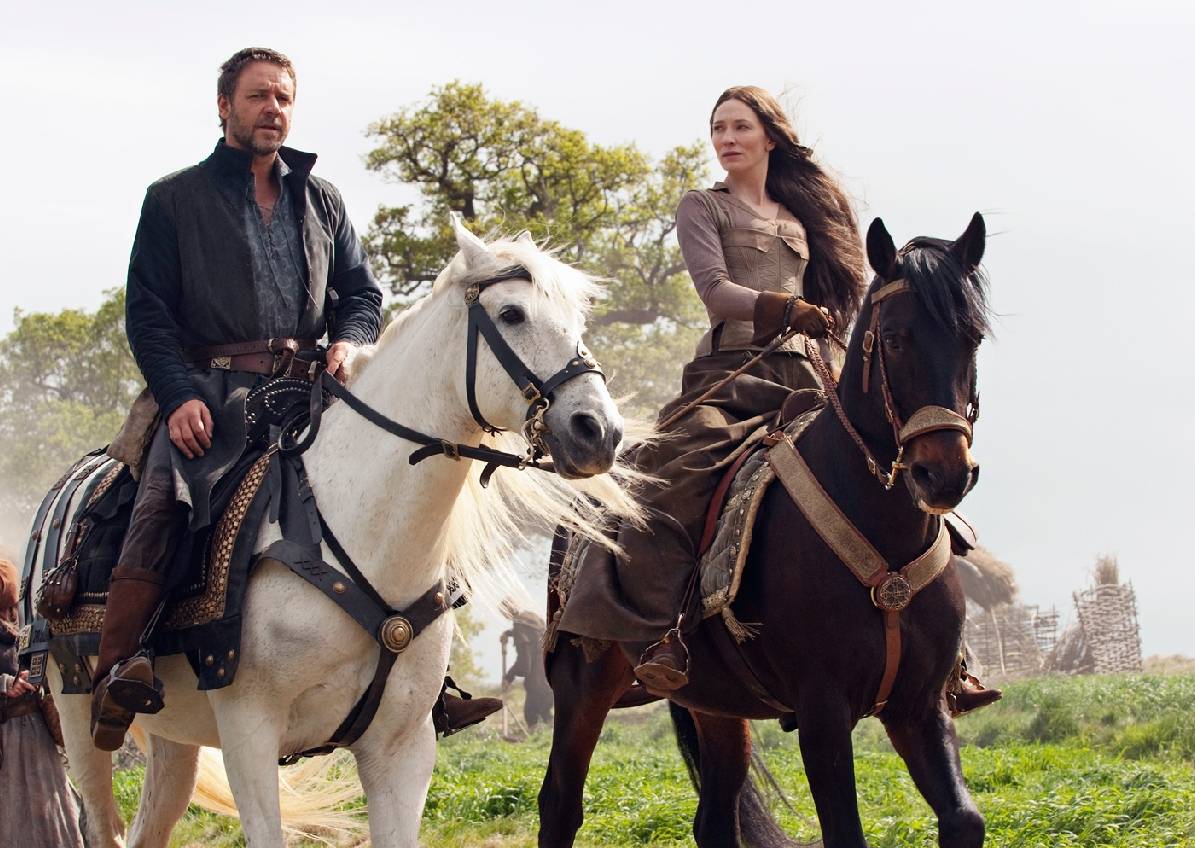
I have nothing left to say about this origin story, other than what I said in my review. Crowe's Hood is more gruff, more macho and less inclined to laugh than previous portrayals. He wears less flashy, more practical clothes than Flynn and co too. Some of the scenes are almost stolen directly from the Costner film, as Crowe makes a similar speech to rouse people to his cause and with the grimy looking misse-en-scene (plus they both ditched the hat in favour of looking "hard").


Anyway... those are the major cinematic versions of Robin Hood (I know, I missed out the Frazer 1912 version, but I couldn't find a clip). Hope you enjoyed them.

Friday, 14 May 2010

'Robin Hood' review: Irredeemably terrible, overlong nonsense...


Many Robin Hood films have been made over years from the sublime (1938’s ‘The Adventures of Robin Hood’ staring Errol Flynn) to the ridiculous (Mel Brooks’ 1993 comedy ‘Robin Hood: Men in Tights’ in which the role fell to Cary Elwes). Adaptations of the story have seen Robin turned into an anthropomorphised fox (Disney’s 1973 animated version) and, more disturbingly, into Kevin Costner (1991’s ‘Prince of Thieves’). All of these versions of the legend, however flawed, attempted to turn the story into something fun and good-natured, with its hero cast as something of a quick-witted and sprightly rouge. Ridley Scott’s new version of the tale (named err… ‘Robin Hood’), some may be pleased to know, doesn’t re-tread the old ground and submit to this formula, with Scott managing to avoid any of the above.

Yes, ‘Robin Hood 2010’ (as I shall refer to it) is the opposite of fun and its hero is the opposite of sprightly. The "good-natured" part is also glaringly absent, as Russell Crowe's Robin Hood does almost nothing for the poor and robs precious little from the rich, as he mumbles in a generic “Northern” accent throughout the most turgid, bum-numbingly boring two hours and twenty minutes of recent memory.

Here Scott and his writers (‘LA Confidential’ and ‘Mystic River’ scribe Brian Helgeland, along with two of the intellectual heavyweights that brought us ‘Kung Fu Panda’) attempt to do for Robin Hood what Christopher Nolan did (with much better results) for Batman. This, we are told from the off, is the beginning of the legend and the film ends similarly to ‘Batman Begins’: with Hood established and ready for even greater adventures. The key difference, however, is that this film is tumour-inducingly dull from start to finish.

To begin with, Crowe has less charisma than a hellish lovechild of Gerard Butler and Shia LaBeouf. He grunts and mumbles his way through the film, never really raising a smile, flattening any line which might be humorous (and indeed, despite such able writers, we are never treated to ‘Kung Fu Panda’ level hilarity here) as he marauds the English country side looking like a huge, bearded potato on horseback. Flynn might not have played a Hood mired in psychological concerns (“who was my father!?” etc etc), but he was watchable and charming, bringing the character to life in your imagination. Children could (and did) aspire to be Flynn’s Robin Hood, swinging on chandeliers and besting his enemies with his wit as well as his arrows. I can not conceivably imagine anybody growing up wanting to mumble there way through Sherwood Forest as Russell Crowe.


Ok, so maybe that’s the point here: this Robin Hood is not for kids. It’s an adult version, with a tough, wilful Maid Marian played by Cate Blanchett (far from the courtly and mannered presence of, say, Olivia de Havilland) and a rugged “manly” hero in Crowe. Yes, I can see that Crowe is more convincingly a man who could have fought in the Crusades than Flynn or Costner or Elwes ever were. But is that an excuse for boring me with his mumbling presence? To paraphrase Benjmin Franklin: those who would give up essential entertainment to purchase a little temporary realism, deserve neither entertainment or realism.

Scott shoots the film in a bland, uninspired (if technically competant) way: the action sequences are coherent (if uninterestingly choreographed). Though the flashy, high-octane close-ups of people pulling bow-strings and the sped-up helicopter shots of the countryside are just plain absurd in this context. When we see French soldiers they are usually making stereotypically “French” noises in a Pythonesque fashion. I always expected them to mutter “feche la vache” at a key moment and turn the tide of battle in their favour by launching a cow onto the field. Throw into the mix a laugh-out-loud medieval version of the D-Day landing, with the French arriving on an English beach in World War II landing craft (complete with obviously derivative ‘Saving Private Ryan’ shots of arrows hitting soldiers in the water) and you have yourself a contender for “worst film of the year”.

But as obviously, inherently, breathtakingly silly the action sequences are (undercutting the “realism” that necessitated beefy Mr. Crowe in the first instance), I would have found myself far more entertained if the film had been an hour shorter and comprised solely of these scenes (the opening assault on a castle; the liberation of a village; the battle on the beach). Instead we are treated to a litany of awkward scenes that feature Crowe and Blanchett romancing (phwoar!). And when we aren’t being presented with that tantalising prospect, we have a load of historically inaccurate, xenophobic, right-wing gibberish to listen to.


The best thing I can say about this version of the story is that it takes a rather dim view of the crusades compared with other versions which tend to valorise King Richard the Lionheart (this is perhaps unsurprising from Scott, who directed ‘Kingdom of Heaven’). Similarly the church is shown as the wealthy and corrupt organisation it was at that time. Prince John (Oscar Isaac, who is probably the best thing in the film) is allowed to make some good points about his brother’s crusade, even as he sides with the perennially evil Mark Strong. But this revisionist look at the legend is a step in the right direction which is undermined by the extreme crap-ness of the rest of the production.

My brother (Chris Beames) summed it up best when after seeing the film he wrote the following as his Facebook status: “If you’re thinking of going to see Robin Hood. Then I think you should. Because at least that way it is fair.” Don’t worry; I am not yet angry enough at the human race to wish the same upon you.

I will say this: if you really, really liked ‘Gladiator’ (and you actually enjoyed the above trailer), then maybe you’ll want to see Crowe doing his Maximus bit in the woods of England. If, like me, you didn’t even like that film very much (though ‘Gladiator’ is a classic compared with this), then there is nothing for you here whatsoever.

'Robin Hood' is out now and is rated '12a' by the BBFC.